The Importance of Post‑Operative Rehabilitation After a Frenotomy
As a General Practitioner on the Gold Coast performing oral tie releases (frenotomies), I regularly help families optimise breastfeeding, speech potential, and overall oral function for their infants. A common question from parents is: “Do we really need to do the post‑release stretches?” Let’s take a closer look at why these exercises are so important for long‑term results.
1. Preventing Re‑Attachment and Repeat Surgery
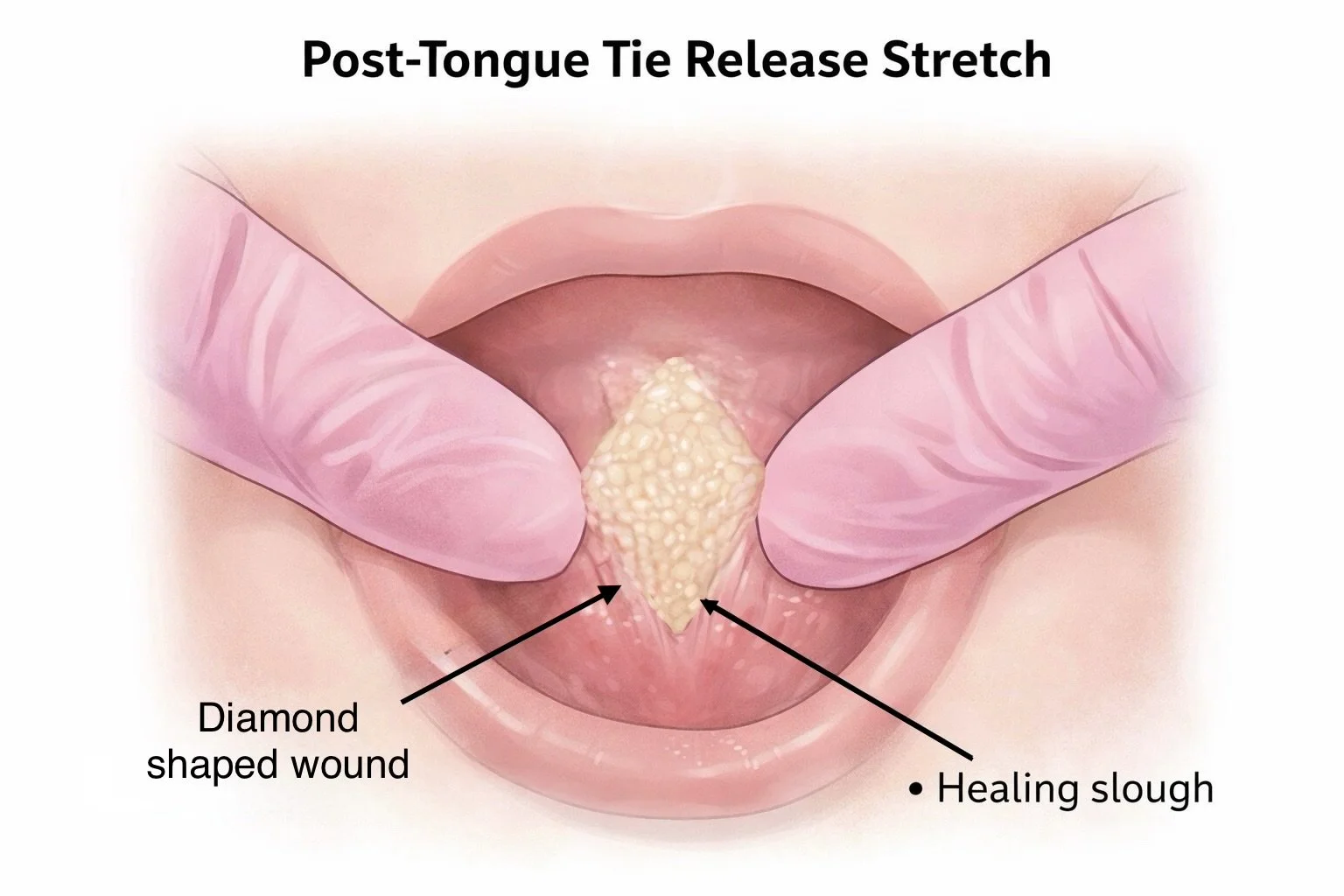
Although research remains limited, available studies consistently show that babies whose families perform regular post‑operative stretches have lower rates of frenulum re‑attachment and fewer repeat releases. Stretches keep the healing wound mobile and separated while new tissue forms, allowing the tongue to heal freely and functionally.
2. Minimising Scarring
Post‑release stretches limit scar formation by gently counteracting the body’s natural wound contraction. This helps the new frenulum remodel into a soft, flexible band rather than a short, tight scar.
After a frenotomy, the wound quickly fills with granulation tissue and collagen, which peaks around days 14 -21. During this phase the healing “diamond” can feel firmer or smaller - a normal part of the process. Without gentle stretching, collagen fibres tighten and shorten, mimicking a recurrent tie.
Regular lifts and tongue stretches:
Lengthen collagen fibres during healing, allowing a more elastic scar.
Prevent early adhesions that cause true re‑attachment.
Maintain the tongue’s range of motion (elevation, protrusion, lateralisation).
As I often explain to parents: “If you never move a knee after surgery, it stiffens and scars; controlled stretching keeps it moving and stops the scar from locking it down.”
3. Improving Feeding and Functional Outcomes
Evidence suggests that babies who complete structured stretching programs experience fewer ongoing feeding difficulties, less scar tissue, and greater comfort during feeding. Stretches are not just about keeping the wound open - they support proper tongue function, suck strength, and coordination.
Adjunct therapies such as infant myofunctional therapy or gentle bodywork further enhance functional outcomes beyond surgery alone.
4. Restoring Tongue Movement and “Muscle Memory”
While the frenectomy releases the physical restriction, the tongue’s movement patterns and muscle memory often need retraining. Studies and case reports (e.g., Dodal et al., 2024) show that targeted tongue exercises after release improve muscle awareness, posture, and mobility far more effectively than surgery alone.
Combining frenectomy with professional myofunctional or physiotherapeutic guidance helps ensure the tongue learns its new range of motion and maintains those gains.
Timing Matters
Stretches are usually started within 24 - 48 hours after the procedure, while the wound is still soft and pliable. The most critical period is between days 5 and 21, when the scar tissue naturally tries to contract. Consistent daily stretches through this phase help prevent restriction and promote optimal healing.
Recommended Support Practitioners
I recommend parents begin gentle rehabilitation immediately after release, alongside early follow‑up with an experienced chiropractor, physiotherapist, osteopath, myofunctional therapist, or lactation consultant. These professionals can demonstrate the correct technique for lifts, stretches, and oral motor exercises, giving parents confidence at home.
Here on the Gold Coast, I work closely with trusted infant specialists to provide multidisciplinary rehabilitation. Ideally, families arrange a pre‑surgery consultation with their chosen provider to plan post‑operative bodywork and feeding support in advance - ensuring calm, coordinated care from day one.
Clinical Take‑Home
The body naturally pulls wounds together; stretches remind healing tissue to stay longer and looser.
Consistency during the first 3 - 4 weeks is crucial - this is when the tissue wants to tighten most.
Gentle, regular movement helps new tissue form into a flexible, functional frenulum rather than a restrictive scar.
For Gold Coast Parents
If you suspect your baby has an oral tie, speak with your local lactation consultant, physiotherapist, myofunctional therapist, chiropractor, or osteopath. If feeding or movement challenges persist despite conservative care, you can arrange a thorough assessment and release with me for evidence‑based, family‑centred treatment and thriving results.
References
Dodal AA et al. (2024). Postoperative Tongue Exercises for Ankyloglossia Following Lingual Frenectomy. Cureus, 16(9): e69806. PubMed link
Tecco S et al. (2015). Frenulectomy of the tongue and the influence of rehabilitation exercises on the sEMG activity of masticatory muscles. J Electromyogr Kinesiol, 25(4):619–628. PubMed link
Valle‑Del Barrio B et al. (2025). Readhesion of Tongue‑Tie Following Neonatal Frenotomy: Incidence and Impact of Post‑operative Exercises in a Prospective Observational Study. Children (Basel) 12(8):971. PMC link