How Circumcision Decreases the Risk of Cancer
As a GP on the Gold Coast who performs circumcisions, my role is to provide balanced, evidence‑based information so families can make the decision that feels right for them. Many parents consider circumcision for their sons because there is evidence it can reduce the risk of certain cancers and I’m often asked, “How does circumcision lower the risk of cancer?” In this blog, I’ll explain the mechanisms involved, but I’ll also put that into perspective by discussing how large the relative risk reduction actually is.
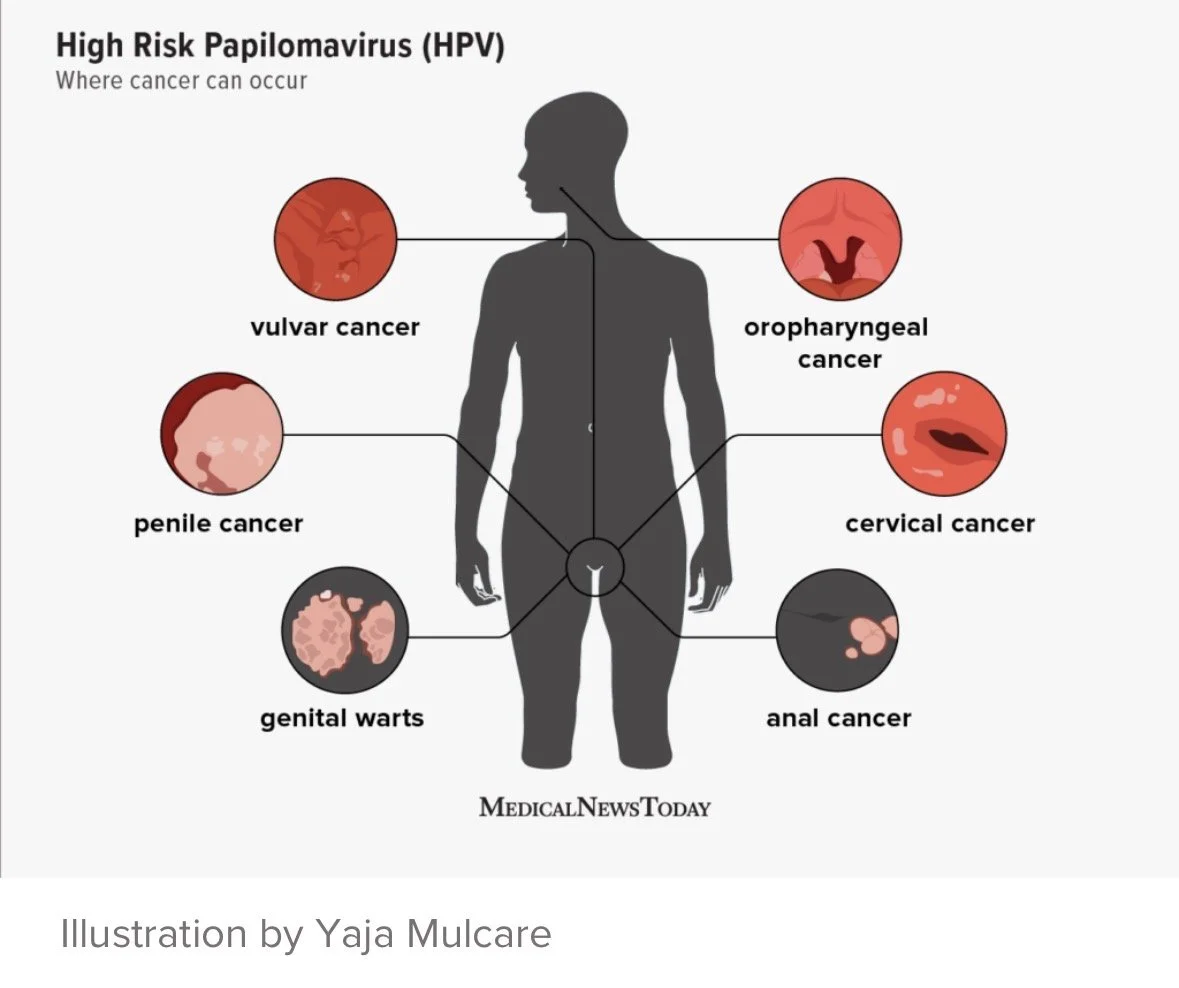
Yes, circumcision does offer some protection against specific cancers; however, these cancers are rare in affluent settings like Australia, and circumcision is only one of several strategies available to reduce cancer risk so one must consider all the facts.
Key points
Circumcision does decrease the risk of some cancers
Penile cancer is very rare in Australia (well under 1 case per 100,000 men per year). However, it is consistently more common in populations where circumcision is uncommon.
Childhood circumcision appears to roughly halve to two‑thirds the risk of invasive penile cancer, largely by preventing phimosis and chronic inflammation.
Circumcision reduces penile HPV infection in men and is linked with lower cervical cancer risk in female partners, especially where HPV and cervical cancer rates are high and screening is limited.
There is emerging, modest evidence that circumcision before first intercourse may slightly reduce prostate cancer risk, but findings are inconsistent and any effect is small compared with other prostate cancer risk factors.
Even without circumcision, the absolute risk of these cancers for a boy growing up on the Gold Coast remains low, particularly with good genital hygiene, HPV vaccination, and cervical screening.
Which cancers, and how circumcision changes risk
Penile cancer
A systematic review found that circumcision in childhood or adolescence was associated with about a 65 - 70% decrease in the relative risk of invasive penile squamous cell carcinoma compared with remaining uncircumcised.
In other words, circumcised males have roughly one‑third of the risk of invasive penile cancer compared with uncircumcised males. We see the rates of penile cancer decrease in countries with higher circumcision prevalence such as Australia and the USA where penile cancer incidence is about 0.5 -0.8 per 100,000 compared with around 1.4 per 100,000 in England and Wales where circumcision is less common.
The strongest modifiable risk factor for penile cancer is phimosis (a non‑retractile foreskin in later childhood or adulthood), which markedly increases risk; circumcision removes the foreskin, eliminating phimosis, and reducing chronic inflammation, smegma build‑up and recurrent balanitis, all of which are thought to contribute to malignant change.
As you can see, while circumcision can reduce the relative risk of penile cancer by around 65 -70%, the absolute risk for any individual man remains very low, since this type of cancer is rare.
Cervical cancer in female partners
As we have learned, cervical cancer is driven primarily by persistent infection with high‑risk HPV types. Randomised trials and observational data show that adult male circumcision lowers the prevalence and incidence of high‑risk genital HPV infection in men and improves HPV clearance, which in turn can reduce HPV exposure for female partners.
In a large case‑control study, women with circumcised partners who had multiple sexual partners experienced about a 50 - 60% reduction in relative cervical cancer risk compared with women whose partners were uncircumcised in similar higher‑risk sexual behaviour groups. Put simply, in these higher‑risk groups, having a circumcised partner roughly halves a woman’s relative risk of cervical cancer.
Globally, this has public health implications in settings without widespread HPV vaccination or cervical screening. On the Gold Coast, HPV vaccination and regular cervical screening remain the mainstay of cervical cancer prevention, with circumcision playing more of a supportive role in reducing HPV transmission.
Prostate cancer
Several studies have explored whether infections and inflammation in the prostate and genital tract might contribute to prostate cancer risk. Because circumcision is associated with a lower risk of some sexually transmitted infections, investigators have looked for a link.
One population ‑ based case - control analysis found that circumcision before first sexual intercourse was associated with about a 15% reduction in prostate cancer risk compared with uncircumcised men, with similar patterns for less and more aggressive disease. However, these results have not been widely reproduced, and it is believed that these are modest relative risk reductions and may be influenced by confounding factors such as sexual behaviour and infection history.
For an individual man in Australia, any prostate cancer protection from circumcision is likely to be small compared with age, family history, lifestyle and other established risk factors.
What is the risk without circumcision?
For families considering circumcision on the Gold Coast, it’s important to keep the baseline risks in perspective.
Penile cancer: Lifetime risk is very low in Australia, whether circumcised or not, though slightly higher in uncircumcised men, especially if phimosis or chronic inflammatory conditions are present.
Cervical cancer in partners: In high‑income countries with HPV vaccination and screening, cervical cancer risk is already markedly reduced; partner circumcision adds some further reduction in HPV exposure but is not the primary preventive strategy.
Prostate cancer: Common in older men, but the contribution of circumcision status to overall risk appears small and uncertain.
In practical terms, an uncircumcised boy who maintains good genital hygiene, receives HPV vaccination, and whose future partners participate in cervical screening will still have a very low absolute risk related to these cancers.
How I discuss this with families (Gold Coast GP perspective)
As a doctor providing circumcision services on the Gold Coast, I frame cancer risk reduction as one potential health benefit among several, rather than the sole reason to circumcise. I also emphasise that circumcision is an elective procedure with its own small but real risks and that not all boys or families will see enough benefit to justify it.
Points to consider:
Cancer‑related benefits are clearest for penile cancer, modest for cervical cancer in partners, and uncertain or small for prostate cancer.
Penile cancer is rare; circumcision lowers an already low risk, mainly by preventing pathological foreskin conditions like phimosis.
Non‑surgical measures (HPV vaccination, cervical screening, safer sex, genital hygiene) are powerful tools for reducing cancer risk regardless of circumcision status.
Parents, boys and men have the right to choose circumcision or not, based on their values, cultural or religious beliefs, and how they personally weigh small changes in risk against the potential risks of a procedure.
Reference list
Castellsagué X, et al. Male circumcision, penile human papillomavirus infection, and cervical cancer in female partners. N Engl J Med. 2002.
Larke NL, et al. Male circumcision and penile cancer: a systematic review and meta‑analysis. BJU Int. 2011.
Morris BJ, et al. RACP's policy statement on infant male circumcision is ill‑conceived. J Paediatr Child Health. 2006.
Sewell J, et al. Trends in penile cancer: a comparative study between Australia, England and Wales, and the US. Cancer Causes Control. 2015.
Spence AR, et al. Circumcision and prostate cancer: a population‑based case–control study. BJU Int. 2014.
Tobian et al. (2021). Male circumcision reduces penile HPV incidence. PMC.
Tseng et al. (2011). The Strong Protective Effect of Circumcision against Cancer of the Penis. Wiley.
World Health Organization. Preventing HIV through safe voluntary medical male circumcision for adolescent boys and men in generalized HIV epidemics. 2020.
Wright JL, et al. Circumcision and the risk of prostate cancer. Cancer. 2012.